





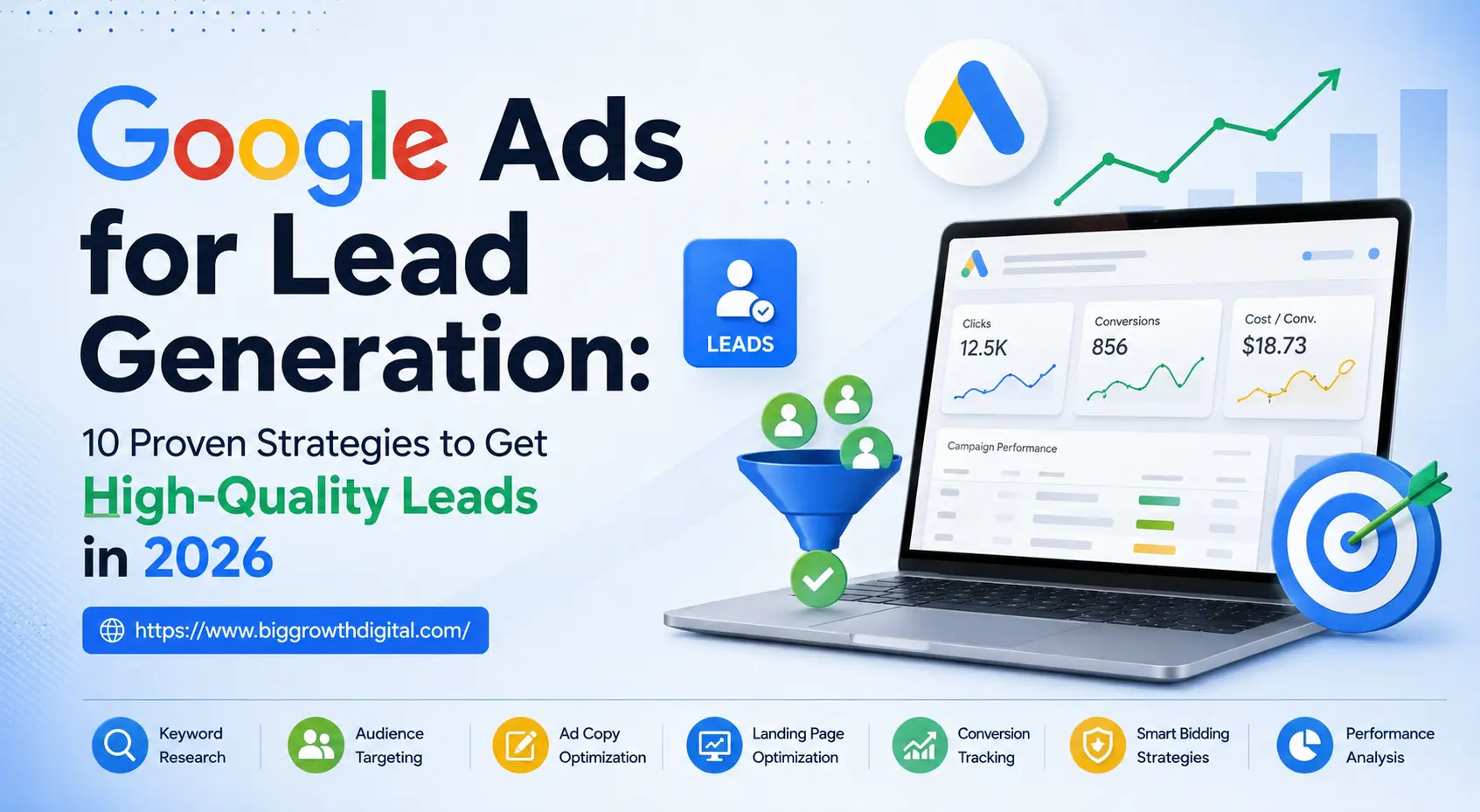
You are not alone if you run ads regularly and still see no real difference in your lead count. Most businesses go through the same cycle, and here's a fact: businesses are not failing because Google Ads doesn't work. Most campaigns fail because they aren't built with a lead generation strategy in mind — from tracking to CRM integration to landing page structure.
Google ads for lead generation stands as one of the most effective acquisition channels in 2026, but the tactics that worked five years ago are no longer enough. Competition is higher, CPCs are rising, and Google's own systems (Smart Bidding, Performance Max, Consent Mode v2) now expect a fully connected data pipeline — not just a well-written ad.
According to Google, businesses earn an average of $2 in revenue for every $1 spent on Google Ads. Average CPCs across competitive B2B and real estate categories currently range between $2–$50 depending on intent and location, while the average landing page conversion rate across industries sits around 4–6%, and mobile traffic now accounts for over 60% of lead form submissions.
In this guide, we'll walk through the complete lead generation ecosystem — not just campaign tips — covering strategy, tracking, CRM integration, common mistakes, and a ready-to-use checklist.
What Is Google Ads Lead Generation?
Google ads for lead generation refers to running paid search, Performance Max, or Display campaigns with the specific goal of capturing user information a form fill, a call, a chat, or a booking rather than a direct product sale. Unlike ecommerce campaigns optimized for purchases, lead gen campaigns are optimized around conversion optimization signals like form submissions, call duration, and CRM-qualified leads.
This distinction matters because Google's Smart Bidding algorithms behave differently depending on the conversion goal you feed them. A poorly defined "lead" (e.g., counting every form fill as equal value) will train your campaign to chase volume instead of quality one of the most common reasons google ads campaigns plateau.
How Google Ads Lead Generation Works
The full ecosystem looks like this:
Lead Generation Goal → Campaign Type Selection → Keyword/Audience Research → Landing Page → Conversion Tracking (GA4 + Google Tag Manager) → Lead Qualification (CRM) → Optimization Signal Feedback → Scaling
Most guides only cover the middle of this chain (campaign + keywords). The parts most businesses skip and the parts Google's algorithm actually needs to optimize well are the tracking and CRM feedback loop, covered later in this guide.
Key entities that power this ecosystem: Google Tag Manager, GA4 conversion tracking, Enhanced Conversions, Offline Conversion Import, Consent Mode v2, Smart Bidding signals, Customer Match, Google Business Profile, and Quality Score.
Search Campaigns vs Performance Max: Which One Generates More Leads?
Factor | Search Campaigns | Performance Max |
|---|---|---|
Best for | High-intent, bottom-funnel leads | Scaling once you have conversion data |
Targeting | Manual keyword targeting | AI-driven, audience signals |
Control | Full control over match types, negatives | Limited manual control |
Data requirement | Works with little historical data | Needs 30+ conversions/month for smart bidding to learn |
Placements | Google Search only | Search, YouTube, Gmail, Display, Discover, Maps |
Ideal starting point | Yes — start here | No — scale here after Search proves ROAS |
When should you use Search campaigns? When you're starting fresh, have limited conversion history, or need precise control over which keywords trigger your ads.
When should you use Performance Max? Once your account has enough conversion volume (generally 30+ conversions in the last 30 days) for Smart Bidding to have sufficient signal.
Which industries benefit most? Real estate, B2B SaaS, healthcare, legal, education, and local services categories where a single lead has high lifetime value and justifies a higher CPC.
Who shouldn't rely on Google Ads alone? Businesses with very low margins per lead, or those without a follow-up/CRM process in these cases, Google Ads can generate volume the sales team can't actually convert, wasting budget on the paid side.
Top 10 Strategies to Generate Leads From Google Ads
1. Use High-Intent Long-Tail Keywords for Better Lead Quality
Long-tail keywords align closely with user intent and produce high-quality leads because searchers already know what they want. Broad keywords with high volume often attract users still in the research phase.
Examples: "google ads agency for real estate leads," "best lead generation company for builders," "affordable PPC management for startups." These convert better and carry lower CPC despite lower volume.
2. Add Negative Keywords Religiously
Without negative keywords, budget leaks into irrelevant searches "free marketing tools," "google ads jobs," "lead generation course." Reviewing search term reports weekly and adding negatives is one of the highest-ROI habits in conversion optimization.
3. Implement Lead Form Assets (formerly Lead Form Extensions)
Lead form assets let users submit information directly from the ad no landing page click required. This reduces friction significantly, especially on mobile, where over 60% of form submissions now happen. Works best for real estate, consultation services, B2B, and event registrations.
4. Build Dedicated Landing Pages for Landing Page Optimization
Sending traffic to a homepage instead of a campaign-specific page is one of the fastest ways to kill conversion rate. A strong landing page includes a clear banner matching ad copy, one dedicated CTA, fast load speed (under 2.5 seconds), minimal distractions, and credibility elements like testimonials.
5. Use Remarketing to Recover Lost Leads
Remarketing produces some of the cheapest, highest-converting leads because the audience already knows your brand. A user who visits your pricing page and leaves, then later sees a testimonial-based remarketing ad, is far more likely to return and convert than a fresh cold visitor.
6. Combine Broad Match with Smart Bidding
Broad match, once considered risky, now performs well when paired with Maximize Conversions or Target CPA bidding but only once your account has sufficient conversion data for the algorithm to learn from.
7. Structure Campaigns by Keyword Themes
Tightly themed ad groups (e.g., "Real estate lead generation" separate from "Builder lead generation services") improve ad relevance, Quality Score, and Impression Share which directly lowers CPC and improves Search Lost IS.
8. Continuously Test Ad Copy Using Responsive Search Ads
Test different combinations of benefit-led, urgency-led, and credibility-led headlines inside your Responsive Search Ads. Regular testing improves CTR without increasing budget.
9. Track Offline Conversions Through CRM Integration
A form fill isn't revenue until it's qualified. Connecting your CRM (HubSpot, Salesforce, or custom systems via Zapier/Webhooks) to Google Ads through Offline Conversion Import lets Google optimize for leads that actually convert to revenue not just volume.
10. Use Performance Max Strategically Once You Have Data
Start with Search, prove your ROAS, then layer in Performance Max using strong audience signals (Customer Match lists, website visitors, similar segments) to scale reach across Search, YouTube, Gmail, and Display.
Conversion Tracking & CRM Integration: The Part Most Advertisers Skip
This is where most Google Ads accounts underperform not in the campaign settings, but in the data feeding those campaigns.
Google Tag Manager (GTM) should fire your conversion tags cleanly across form submissions, calls, and chat events. GA4 should be connected to Google Ads so conversion data flows both ways. Enhanced Conversions improve match rates by hashing first-party data (email, phone) at the point of conversion critical as cookie tracking degrades. Consent Mode v2 is now required for compliant tracking in most regions, and accounts without it are already seeing conversion data gaps.
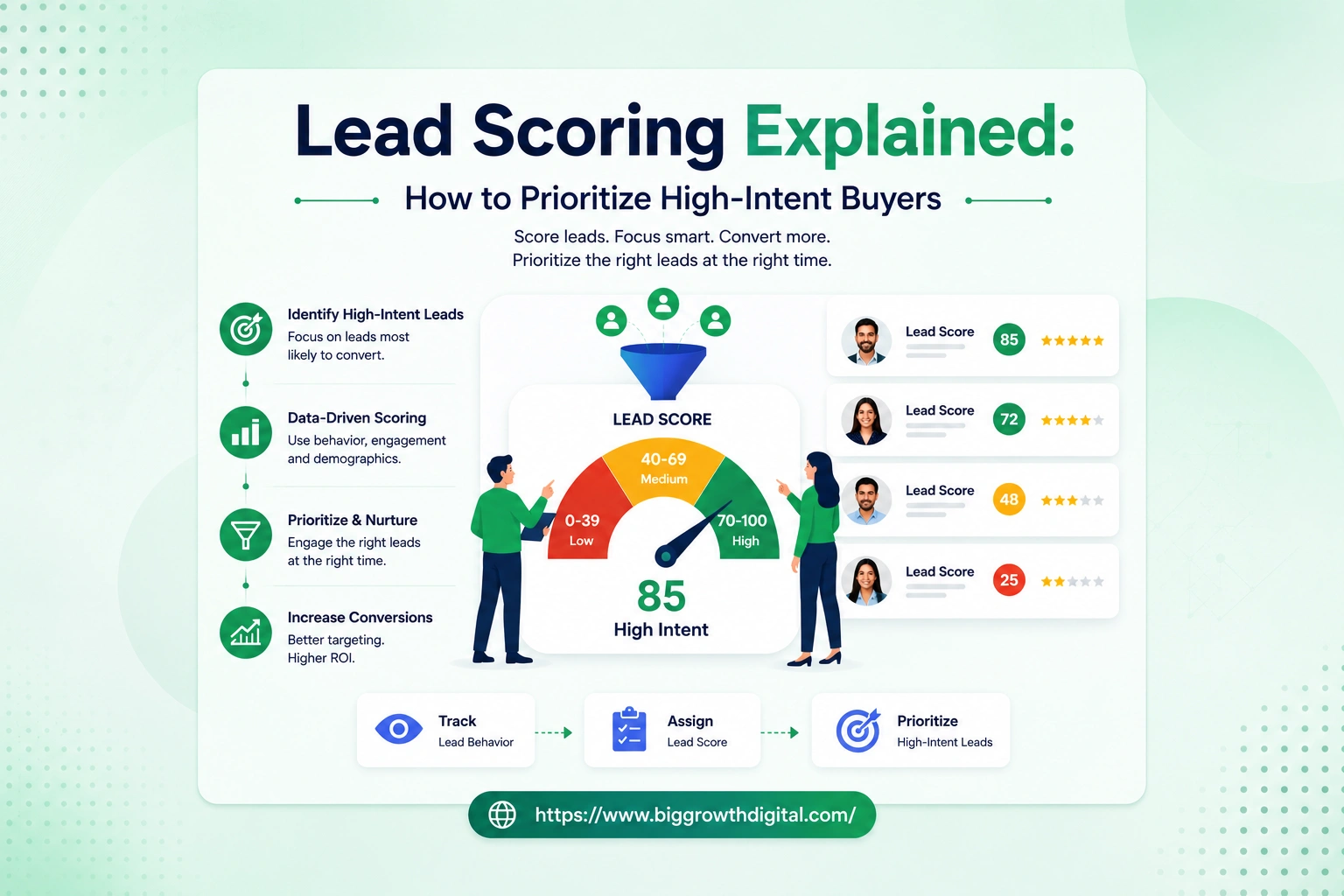
Beyond tracking, lead scoring inside your CRM assigning quality tiers to leads before they're marked "converted" in Google Ads is what separates accounts optimizing for lead volume from accounts optimizing for conversion optimization that actually maps to revenue.
Call Assets and call tracking should also feed into this same system, since a meaningful share of high-intent leads (especially in real estate and local services) convert by phone, not form.
10 Common Google Ads Lead Generation Mistakes
Using broad match without sufficient conversion data
Sending traffic to the homepage instead of a dedicated landing page
Skipping negative keyword reviews
No call tracking set up
No CRM integration — Google never learns which leads were actually qualified
Static ad copy that hasn't been tested in months
Weak, slow-loading landing pages
No audience exclusions (e.g., excluding existing customers or job seekers)
Overly broad targeting without keyword themes
Wrong bidding strategy for the account's data maturity (e.g., jumping to Performance Max too early)
Google Ads Lead Generation Checklist
✔ Conversion tracking set up via GA4 + Google Tag Manager
✔ Enhanced Conversions enabled
✔ Consent Mode v2 implemented
✔ Negative keyword list reviewed weekly
✔ Lead Form Assets added where relevant
✔ Dedicated landing page per campaign
✔ CRM connected (HubSpot / Salesforce / Zapier)
✔ Offline conversion import active
✔ Audience signals built (Customer Match, remarketing lists)
✔ Call tracking and Call Assets live
✔ Smart Bidding strategy matched to data volume
✔ Ad copy tested on a recurring cycle
✔ Quality Score and Impression Share reviewed monthly
Case Studies Across Industries
Real Estate: One of our real estate clients reduced cost per lead by 38% within 60 days after restructuring campaigns by keyword intent and implementing dedicated landing pages.
B2B SaaS: A SaaS client consolidated 40+ scattered keywords into 4 tightly themed ad groups, improving Quality Score and cutting CPC by roughly a quarter within one quarter.
Local Service Business: A home services business added Call Assets and call tracking, revealing that 55% of qualified leads were coming from phone calls that weren't previously being tracked as conversions — leading to a bidding strategy correction.
Healthcare: A multi-location healthcare provider connected their CRM to Google Ads via offline conversion import, allowing Smart Bidding to optimize toward booked appointments instead of raw form fills, improving lead-to-appointment rate.
Key Considerations for 2026
Focus on Lead Quality, Not Volume: More leads don't always mean better results — optimize for qualified pipeline, not raw form count. Avoid Scaling Too Fast: Give campaigns time to gather conversion data before increasing budget aggressively. Implement Spam Verification: Use reCAPTCHA and double opt-in forms to keep lead quality high. Prioritize Landing Page Optimization: A good ad with a weak post-click experience still fails. Build Full-Funnel Tracking: GTM, GA4, Enhanced Conversions, and CRM integration are no longer optional for competitive categories.
FAQs
Q. Is Google Ads a good platform for lead generation?
Yes its biggest advantage is user intent. Unlike social platforms where ads interrupt browsing, Google captures users actively searching for a solution.
Q. How do I use Google Ads to generate leads?
Set up a Search campaign with "Leads" as the goal, target high-intent keywords, and direct traffic to a dedicated landing page or lead form, with conversion tracking connected via GTM and GA4.
Q. What is the best strategy for Google Ads lead generation? Combine long-tail keyword targeting, dedicated landing pages, CRM-connected conversion tracking, and continuous A/B testing of ad copy.
Q. How much should I spend on Google Ads for lead generation?
Budget depends on your industry's average CPC and target lead volume — start with enough spend to reach 30+ conversions per month so Smart Bidding has sufficient data to optimize.
Is Google Ads better than Facebook Ads for lead generation? They serve different intent levels — Google captures users actively searching, while Facebook/Meta creates demand among users who aren't searching yet. Many businesses use both across different funnel stages.
Q. Which campaign type generates the most leads?
Search campaigns typically generate the highest-intent leads; Performance Max scales volume once sufficient conversion data exists.
Q. What is a good cost per lead (CPL)?
This varies heavily by industry real estate and B2B SaaS often see higher CPLs ($20–$150+) due to higher lead value, while local services may see lower CPLs.
Q. Does Performance Max actually generate quality leads? Yes, but only once fed with strong audience signals (Customer Match, remarketing lists) and enough historical conversion data used too early, it often underperforms Search.
Q. How many conversions are needed before Smart Bidding works well?
Google generally recommends at least 30 conversions in the last 30 days for stable Smart Bidding performance.
Q. How long before I see results from Google Ads lead generation?
Initial lead volume can appear within the first week, but lead quality and cost efficiency typically stabilize over 4–6 weeks as the algorithm gathers data.
Q. Should I use broad match keywords?
Only once your account has sufficient conversion history broad match paired with Smart Bidding can work well, but is risky on accounts with little data.
Q. What is Enhanced Conversions and why does it matter?
It improves conversion match rates by securely matching hashed first-party data (like email or phone) to ad clicks — increasingly important as third-party cookie tracking declines.
Q. Do I need a CRM connected to Google Ads?
For serious lead generation, yes — without CRM feedback (offline conversion import), Google Ads can only optimize for form fills, not actual qualified revenue.
.webp)